Sometimes one likes foolish people for their folly, better than wise people for their wisdom.

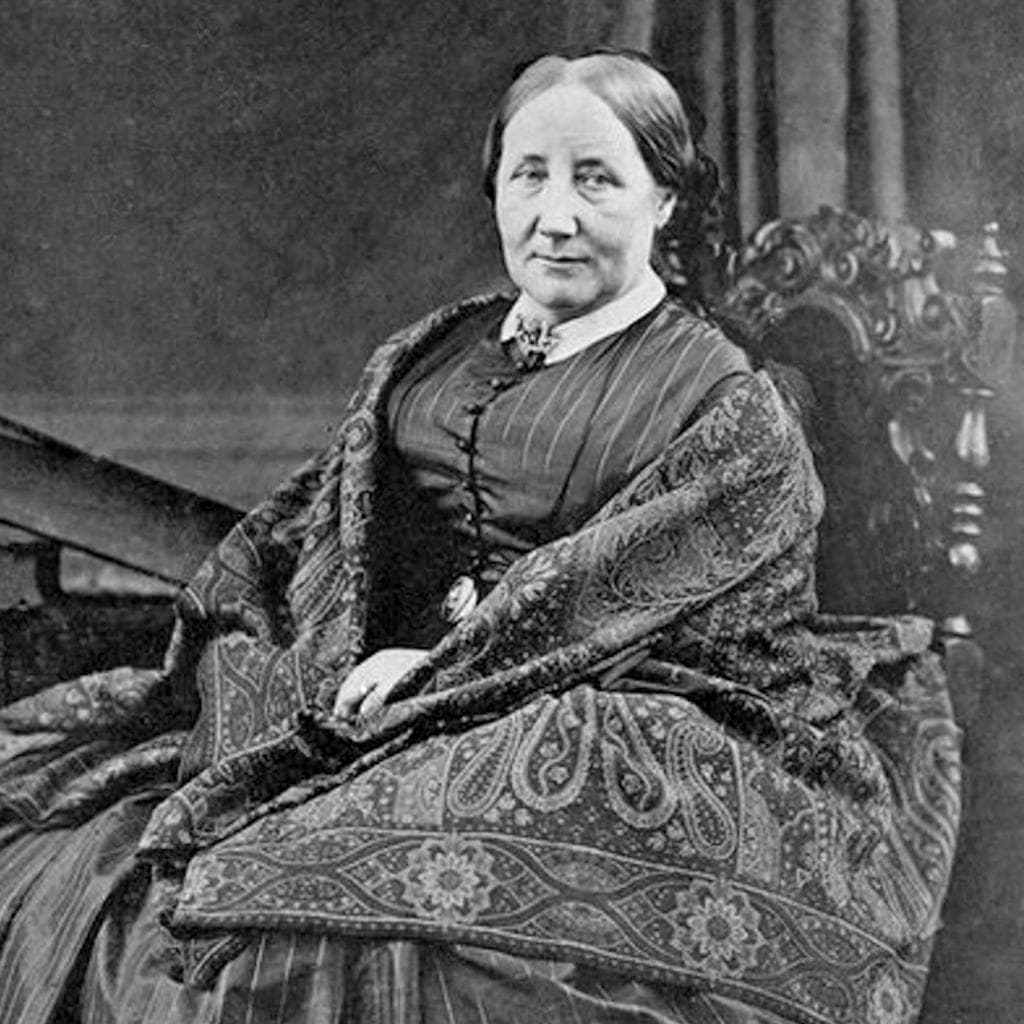
Elizabeth Gaskell
Elizabeth Cleghorn Gaskell (1810-1865) was a popular Victorian novelist, whose works realistically portrayed the harsh realities of urban poverty and industrial strife. Her status as a fine novelist continues to this day, with the television adaption of 'Cranford' increasing public awareness of her works. She was also a talented writer of supernatural stories, as the Wordsworth collection of her stories demonstrates.
Elizabeth Cleghorn Gaskell was born in Chelsea, London in 1810. She was the daughter of William Stevenson, a civil servant and Unitarian minister. Her mother died when Elizabeth was one, and she was brought up by her aunt, Hannah Lamb, in Knutsford, Cheshire. She was educated at Avonbank School in Stratford-upon-Avon and subsequently spent two years with the family of another Unitarian minister, the Rev.William Turner, a distant cousin. On a visit to Turner’s daughter, who lived in Manchester, she met her future husband, William Gaskell, a Unitarian parson. They were married in August 1832 and henceforth Mrs Gaskell’s life was in Manchester. Most of her husband’s parishioners were industrial workers, and Elizabeth was shocked by the levels of poverty she witnessed in that city.
Her first novel, Mary Barton, was written as a result of the death of her baby son. Her friends suggested writing as a means of dealing with her grief. Her novel, which dwelt on issues such as urban poverty and industrial strife, shocked Victorian society, but earned her the respect of writers including George Eliot and Charles Dickens. In fact Dickens was sufficiently impressed to invite her to contribute to his magazine, Household Words, in which her next novel, Cranford, was serialised.
Her third novel, Ruth (1853), dealt with the problems of an unmarried mother. North and South (1855) was another industrial story. There was then an eight-year interval before the publication, in 1863, of Sylvia’s Lovers. Wives and Daughters (1866) was published posthumously, and was in complete contrast to her earlier work, being similar in style and tradition to the works of Jane Austen. She also wrote some fascinating Tales of Mystery and the macabre.
During her life she befriended Charlotte Brontë. They met in 1850, and she wrote a controversial biography of Charlotte after her sudden death in 1855.
She died suddenly in 1865, in the company of her daughters, at her country house in Hampshire.
Essential cookies enable basic functions and are necessary for the proper function of the website.
Name
Description
Duration
Cookie Preferences
This cookie is used to store the user's cookie consent preferences.
30 days
These cookies are used for managing login functionality on this website.
Name
Description
Duration
wordpress_logged_in
Used to store logged-in users.
Persistent
wordpress_sec
Used to track the user across multiple sessions.
15 days
wordpress_test_cookie
Used to determine if cookies are enabled.
Session
Statistics cookies collect information anonymously. This information helps us understand how visitors use our website.
Track user interactions on your site with to optimize engagement and conversions.
Name
Description
Duration
_monsterinsights_uj
Stores anonymized user navigation history on the website, including visited URLs, page titles, and referrer information. It helps site owners analyze user journeys for improved site experience and analytics.
365 days
Marketing cookies are used to follow visitors to websites. The intention is to show ads that are relevant and engaging to the individual user.
Facebook Pixel is a web analytics service that tracks and reports website traffic.