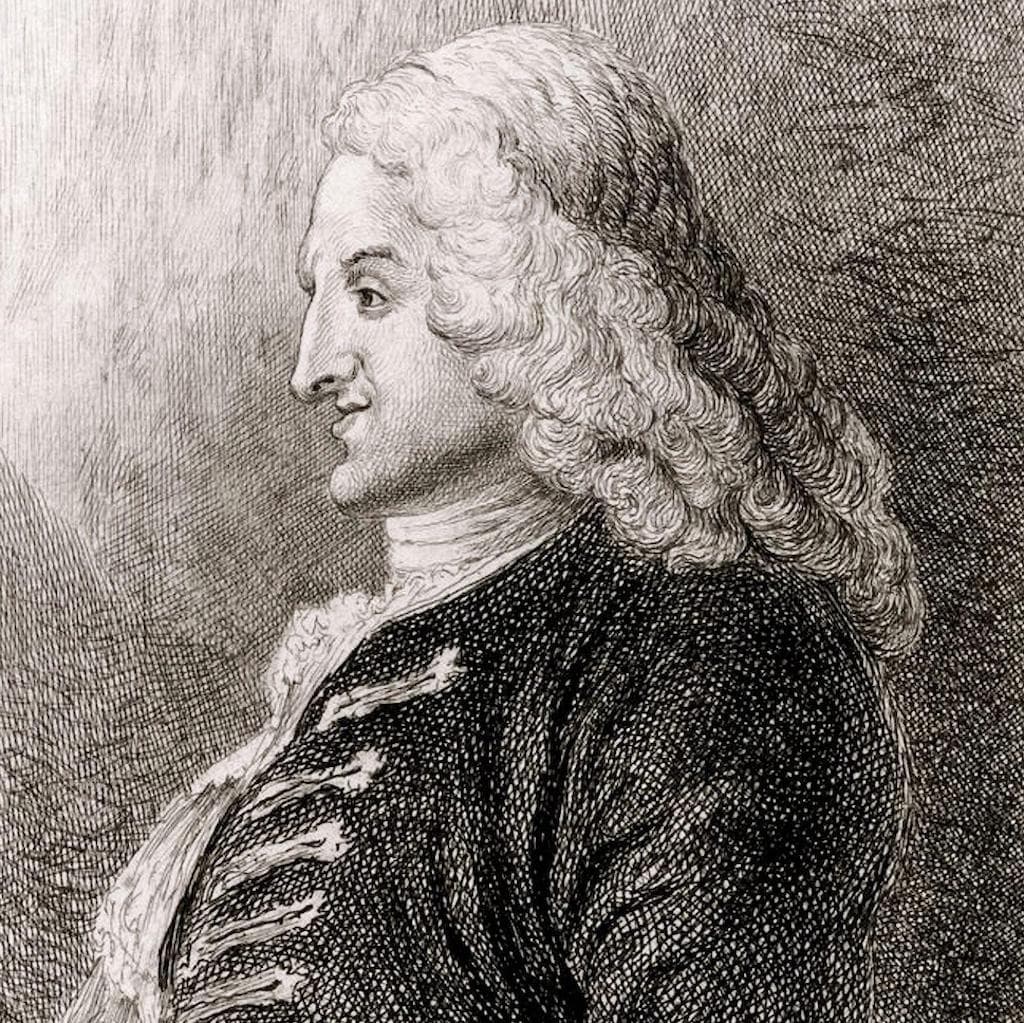
A rich man without charity is a rogue; and perhaps it would be no difficult matter to prove that he is also a fool.

Henry Fielding
Henry Fielding (1707-1754) was an English novelist; building on the foundations put in place by Daniel Defoe and others, he was a major contributor to the form of the modern novel. He wrote four novels, of which the most enduring is ‘The History of Tom Jones, a Foundling’, widely regarded as among the finest books ever written.
English writer, playwright and journalist, Henry Fielding was born of aristocratic descent (his father was a nephew of the 3rd Earl of Denbigh) at Sharpham Park, Somerset in 1707. After his mother died when he was eleven, his father remarried and young Henry was sent to Eton, where he discovered a great love of literature.
Fielding travelled to London in the late 1720s to study law but his main aspiration was to become a playwright. After briefly attending Leyden University, he returned to London, where he wrote some 25 plays between 1728 and 1737. A large number of his plays were satirical and poked fun at the government of the time. This led to the introduction of the Theatre Licensing Act, which imposed censorship on theatre productions. In order to support his new wife, Charlotte Craddock, Fielding became editor of the magazine Champion. He returned to his law studies and in 1740 he was called to the bar. However his health was not good (he suffered from gout and asthma), and this had a detrimental effect on his law practice.
His wife died in 1744 and in 1747 he caused a scandal by marrying his wife’s maid, Mary Daniel, who was pregnant with his child. In 1748 he was made a Justice of the Peace for Westminster and in 1749 for the county of Middlesex. He worked closely with his half brother, John Fielding, to establish a tradition of justice and suppression of crime in London. They were instrumental in setting up a detective force, which later developed into Scotland Yard. When his health began to fail he travelled to Portugal with his wife and daughter in order to recuperate. He died in Lisbon on October 8th, 1754.
In addition to writing over fifteen plays, his novels which include, An Appology for the Life of Mrs Shamela Andrews (1741), The History of the Adventures of Joseph Andrews and his Friend, Mr Abraham Abrams (1742), Tom Jones (1749), and Amelia (1751).
Essential cookies enable basic functions and are necessary for the proper function of the website.
Name
Description
Duration
Cookie Preferences
This cookie is used to store the user's cookie consent preferences.
30 days
These cookies are used for managing login functionality on this website.
Name
Description
Duration
wordpress_logged_in
Used to store logged-in users.
Persistent
wordpress_sec
Used to track the user across multiple sessions.
15 days
wordpress_test_cookie
Used to determine if cookies are enabled.
Session
Statistics cookies collect information anonymously. This information helps us understand how visitors use our website.
Track user interactions on your site with to optimize engagement and conversions.
Name
Description
Duration
_monsterinsights_uj
Stores anonymized user navigation history on the website, including visited URLs, page titles, and referrer information. It helps site owners analyze user journeys for improved site experience and analytics.
365 days
Marketing cookies are used to follow visitors to websites. The intention is to show ads that are relevant and engaging to the individual user.
Facebook Pixel is a web analytics service that tracks and reports website traffic.