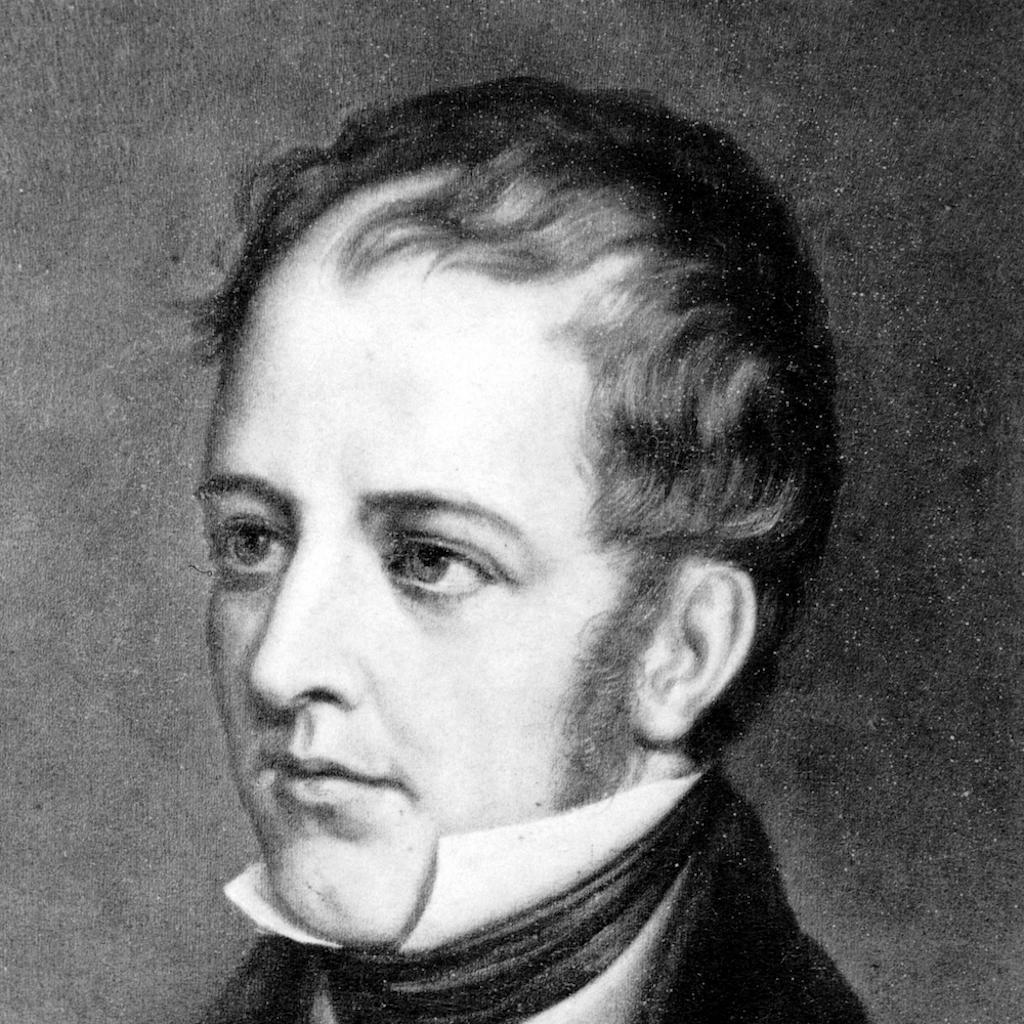
it is an old saying, that you must not work a willing horse to death

Captain Frederick Marryat
Captian Frederick Marryat (1792 - 1848) spent most of his working life at sea, and used his experiences for the basis of much of his writing. His works are now largely forgotten, with the exception of his popular children's book, 'The Children of the New Forest'.
Frederick Marryat was born in London on 10 July 1792, the son of Joseph Marryat, a merchant and member of Parliament. Marryat was educated privately. A natural rebel, he disliked his tutors and school-masters and ran away from home several times. At Holmwood School in Ponder’s End, near Enfield, his classmate was Charles Babbage, the future mathematician.
During his career at sea, Marryat participated in many campaigns throughout the world. He served on the flagship ‘Centaur’ in the Mediterranean in 1810, on the ‘Aeolus’ and ‘Spartan’ in the West Indies and off the coast of North America in 1811-12. In 1819, Marryat married Catherine Shairp, the daughter of British Consul Sir Stephen Shairp. Marryat and Catherine had four sons and seven daughters. Marryat was involved in suppression of smuggling in the English Channel in 1820-22. He then served in the First Burmese War and in 1824 was a senior naval officer in Rangoon, commanding an expedition up the Bassein River.
While at sea, he pursued various scientific studies, as well as inventing a lifeboat, for which he earned a gold medal from the Royal Humane Society. Based on his experiences in the Napoleonic Wars escorting merchant ships in convoys, he developed a practical, and widely used system of maritime flag signalling known as Marryat’s Code. In recognition of these inventions and other achievments, he was named a Fellow of the Royal Society.
He decided to resign his Royal Naval commission in November 1830 and take up writing full time. In 1843 he moved to a small farm at Manor Cottage, Langham, in Norfolk. During his last years Marryat had health problems and the news of his son’s death destroyed his chances of recovery. He died in Langham, Norfolk, on 9 August 1848.
His Naval career influenced many of his novels, including, The Pirate (1836), The Three Cutters (1836) and The Phantom Ship (1839). He is now best known for the semi-autobiographical novel Mr Midshipman Easy (1836) and his children’s novel The Children of the New Forest (1847).
Essential cookies enable basic functions and are necessary for the proper function of the website.
Name
Description
Duration
Cookie Preferences
This cookie is used to store the user's cookie consent preferences.
30 days
These cookies are used for managing login functionality on this website.
Name
Description
Duration
wordpress_logged_in
Used to store logged-in users.
Persistent
wordpress_sec
Used to track the user across multiple sessions.
15 days
wordpress_test_cookie
Used to determine if cookies are enabled.
Session
Statistics cookies collect information anonymously. This information helps us understand how visitors use our website.
Track user interactions on your site with to optimize engagement and conversions.
Name
Description
Duration
_monsterinsights_uj
Stores anonymized user navigation history on the website, including visited URLs, page titles, and referrer information. It helps site owners analyze user journeys for improved site experience and analytics.
365 days
Marketing cookies are used to follow visitors to websites. The intention is to show ads that are relevant and engaging to the individual user.
Facebook Pixel is a web analytics service that tracks and reports website traffic.