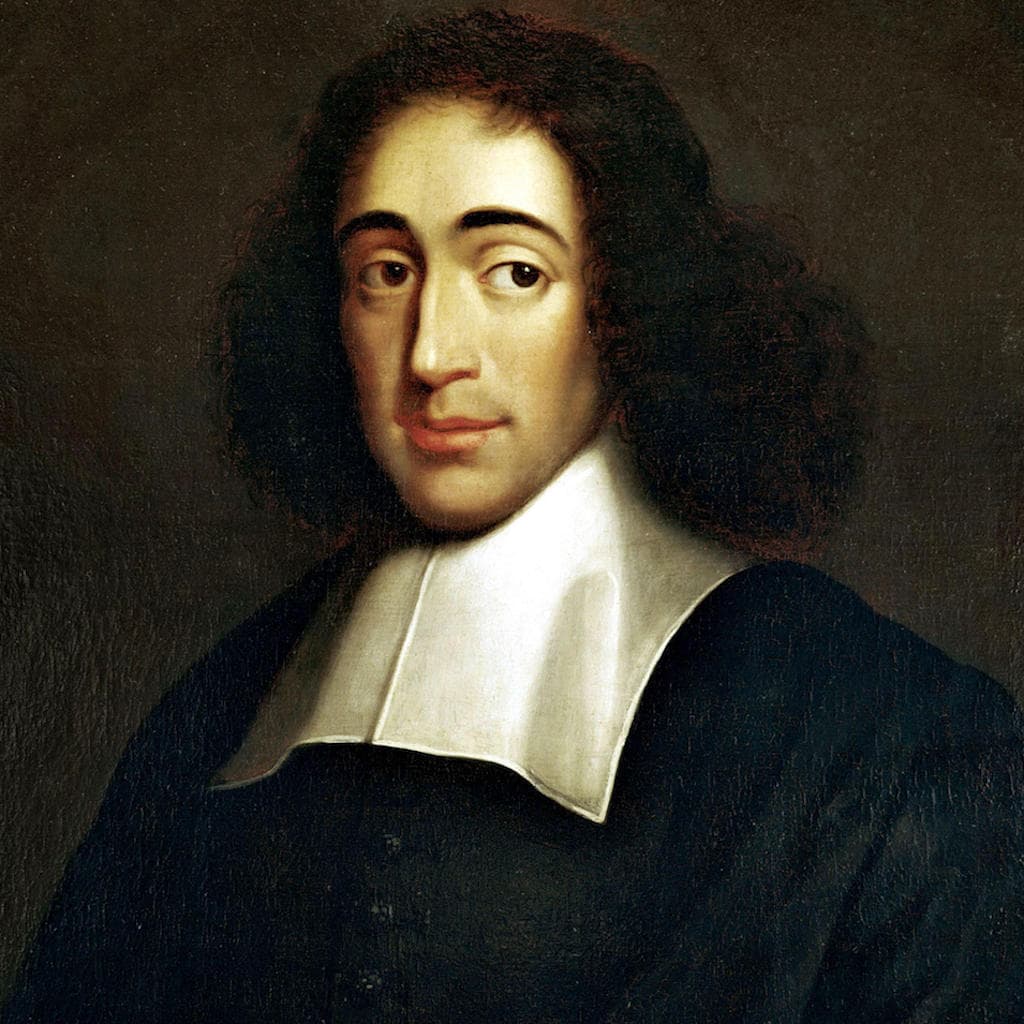
Those who are believed to be most abject and humble are usually most ambitious and envious.

Benedict Spinoza
Benedictus de Spinoza (1632 - 1677) was a Dutch philosopher of Portuguese-Jewish origin. While living quietly, working as a lens grinder, Spinoza wrote of highly controversial ideas which saw him expelled from his community. His 'Ethics', published posthumously, led him to be considered one of the great rationalists of 17th-century philosophy, laying the groundwork for the 18th-century Enlightenment and modern biblical criticism. Spinoza is considered to be one of Western philosophy's most important philosophers.
Baruch or Benedict de Spinoza was born on 24 November 1632 in Amsterdam, Netherlands.
Revealing considerable scientific aptitude, the breadth and importance of Spinoza’s work was not fully realized until years after his death. Today, he is considered one of the great rationalists of seventeenth century philosophy, laying the groundwork for the eighteenth century Enlightenment and modern biblical criticism. By virtue of his magnum opus, the posthumous Ethics, in which he opposed Descartes’ mind – body dualism, Spinoza is considered to be one of Western philosophy’s most important philosophers. Philosopher and historian Georg Wilhelm Friedrich Hegel said that of all modern philosophers, “You are either a Spinozist or not a philosopher at all.”
Though he was active in the Dutch – Jewish community and extremely well-versed in Jewish texts, some claim that his controversial ideas eventually led community leaders to issue a ‘cherem’ (Hebrew: a kind of excommunication) against him, effectively dismissing him from Jewish society at age 23. Some historians argue that the Roman Catholic Church forced them to do so. The philosopher Richard Popkin questions the historical veracity of the ‘cherem’, which Popkin claims only emerged close to 300 years after Spinoza’s death.
Spinoza lived quietly as a lens grinder, turning down rewards and honors, including prestigious teaching positions, throughout his life, and gave his family inheritance to his sister. Spinoza’s moral character and philosophical accomplishments prompted twentieth century philosopher Gilles Deleuze to name him “the prince of philosophers”.
He died in 1677 at the age of 44, allegedly of a lung illness, possibly tuberculosis or silicosis exacerbated by fine glass dust inhaled while plying his trade. Spinoza is buried in the churchyard of the Christian Nieuwe Kerk in The Hague.
Essential cookies enable basic functions and are necessary for the proper function of the website.
Name
Description
Duration
Cookie Preferences
This cookie is used to store the user's cookie consent preferences.
30 days
These cookies are used for managing login functionality on this website.
Name
Description
Duration
wordpress_logged_in
Used to store logged-in users.
Persistent
wordpress_sec
Used to track the user across multiple sessions.
15 days
wordpress_test_cookie
Used to determine if cookies are enabled.
Session
Statistics cookies collect information anonymously. This information helps us understand how visitors use our website.
Track user interactions on your site with to optimize engagement and conversions.
Name
Description
Duration
_monsterinsights_uj
Stores anonymized user navigation history on the website, including visited URLs, page titles, and referrer information. It helps site owners analyze user journeys for improved site experience and analytics.
365 days
Marketing cookies are used to follow visitors to websites. The intention is to show ads that are relevant and engaging to the individual user.
Facebook Pixel is a web analytics service that tracks and reports website traffic.